23 July 2013

Batik Day


From the cradle to the grave, batik is part of Indonesian life. Today the nation celebrates as batik is officially added to the Unesco list of the world's intangible cultural heritage.
It is something of a human failing - not appreciating what we have until it has almost slipped through our fingers, especially those things that are intangible by nature.
For centuries, Indonesians have been blessed with a rich ethnic diversity and a wealth of cultural heritage, but in the drive for modernization, it has often been overlooked.
Not until this century have real efforts been made to protect and promote aspects of traditional culture.

For all those who dedicate their time and effort to safeguarding intangible cultural heritage - and for all those who take pride, if belatedly, in what is theirs - having something characteristically Indonesian included on the Unesco world list is a major milestone.

Today, Indonesia receives what could be considered a gift to celebrate its 64th anniversary of independence, with batik - a traditional wax-resist dyeing technique used on textiles - being officially added to the Representative List of Unesco's World Intangible Cultural Heritage.
"Our nomination proposal ranked first among some 111 others submitted last year," said Gaura Mancacaritadipura, who helped draft the batik proposal. 

The official announcement is part of Unesco's fourth session in Abu Dhabi, United Arab Emirates, from Sept. 28 to Oct. 2.
So does this mean that Indonesia is indeed the rightful owner of the textile-making technique that a neighbor has recently laid claim to?
Not necessarily. And perhaps that's not the most important aspect of the ongoing effort to protect and promote batik. 

"This is not about a patent war," said Tjetjep Suparman, the Cultural Affairs Ministry's director general for cultural value, art and films. 

For the future: The Surakarta administration, in Central Java, is planning to include batik making on school curriculums. JP/Ken Mahesa
"It [batik] has been in the public domain for so long, but efforts to put it on the Unesco list could have a great impact on its development."
The inclusion of batik on the Unesco heritage list is a baby step in the nation's ongoing task of striving to keep the tradition alive.
Indeed, it is only the latest step in the revival batik has experienced just this century, with many crediting designer Edward "Edo" Hutabarat with popularizing batik. His 2006 collection kicked off the trend of expanding batik into more than just the de rigeur - and often staid - formal wear, making it a must-have fashion item.
As noted by Adiati Arifin Siregar, chairwoman of traditional textile enthusiasts group Himpunan Wastaprema, the addition to the list is an official acknowledgement that hand-drawn batik is integral to Indonesian culture.
Integral it may be, but the art of batik making - by whatever name it is known - does not have its earliest origins here. Yet over time the Indonesian variety has endured, developing its own distinctive features.
"The technique of using the canting [a pen-like device to draw the batik pattern in wax] and malam [beeswax] only exists in Indonesia," Gaura pointed out, adding that the motifs that developed in Java were another strong individual point for Indonesian batik.
The use of the canting evolved from the need for a brush-like device to produce finer lines on the finer cotton fabric brought by the Dutch during the colonial era. Later, in the 19th century, the canting technique developed into a larger printing device made of brass or copper.
Those with only a cursory understanding of the technique might believe it to be mostly about the painting process. Rather, it is a long, detailed process involving soaking and boiling the cotton mori, lightly drawing the pattern, retracing the pattern with melted wax and then dyeing the cloth several times to achieve the desired shades.
All natural: Traditional batik uses natural fabrics, beeswax and natural materials for dyes. JP/Anissa S. Febrina
The traditional practice of batik making has long been quite natural as it uses either beeswax or wood sap from certain kinds of plants for the dye-resistant ink and natural materials for dyes such as indigo.
But quite apart from the technical details, batik has been recognized as an aspect of intangible cultural heritage, which is a recognition of the part the textile plays in Indonesian cultural life.
As Adiati notes, batik has long been part of the Indonesian people's life cycle, with motifs, particularly Javanese ones, embracing "deep philosophical meanings of life".
"From before one's birth until death, batik is used in various rituals," she said. "From the seventh-month ritual when the mother-to-be is wrapped in seven layers of different batik cloths, each denoting a particular meaning, during the delivery of a newborn, the tedak siten ceremony when a child touches the earth for the first time, [to] batik at weddings, batik as part of the labuhan ceremony when people throw their problems away at sea, [and finally] to batik as a shroud."
And, she added, although Yogyakarta and Central Java are considered the heartland of the traditional art form, it is characteristic of the entire nation.
"Research has shown that hand-drawn batik is found in 19 provinces [in Indonesia], each with the region's own motifs and meanings," she said.
In Javanese culture, noted Dipo Alam, one of the founders of the Indonesian Batik Foundation, traditional batik "has special meanings rooted in the Javanese conceptualization of the universe".
As he pointed out, no other country had requested anything like batik to be added to the Unesco list.
The importance of batik in people's everyday lives was a significant factor in the proposal for its inclusion on the list.
"One of the requirements to be listed as world heritage is not only support from batik researchers and practitioners, but also from various batik associations and communities around the country," Adiati said.
Most important was the grassroots support, she added, "a strong fundamental source of ordinary people".
And "ordinary people" are among those celebrating the news.
Batik fever has swept many parts of the country this week, particularly Yogyakarta and Central Java. President Susilo Bambang Yudhoyono urged Indonesians "wherever they are" to wear batik on Friday, and many started early, with employees at companies across Jakarta - from restaurants to gyms - wearing batik instead of uniforms.
Civil servants of the Yogyakarta Provincial Office are wearing batik for three days, starting Thursday.
"Batik is literally part of our life," said Winarti Agustin, a provincial employee. "From our birth we were carried using batik cloth, and when we die, our body is covered by a piece of batik on top of us."
Technique: Indonesian batik developed its own distinctive features. JP/Anissa S. Febrina
The Yogyakarta administration has also called on residents and schoolchildren to wear batik for a whole week starting Friday. Buildings in the city are also being decorated in batik.
Separately East Java Governor Soekarwo is issuing a decree that all provincial employees wear batik on certain days of the week.
"It will create a certain sense of pride to wear something that is internationally recognized," he said as quoted by Antara from Surabaya.
He noted that East Java has its own styles: "Madura, Sidoarjo, Jombang all have unique potential."
In Surakarta, Central Java, the local administration plans to include batik in the school curriculum.
"From elementary school to high school, starting in 2010," said Rakhmat Sutomo, the head of the Surakarta Education, Youth and Sports Office, as quoted by Antara.
At elementary school, children will be taught basic patterns of batik; high school students will learn about the production process.
All this could be what Iman Sucipto Umar from the Kadin Foundation described as "something we do out of pure concern for the preservation of culture."
Working with several batik observers, Iman initiated and helped complete the 18-month-long effort to compile all the necessary information for Unesco.
"It's only a way of making people more concerned," he added. "What's more important is to build a community that will keep on preserving the culture."
Or in the words of designer Edward Hutabarat, as quoted in The Jakarta Post WEEKENDER in January: "Let the batik talk."
"This is its era now. It's our hope," he said. "It's something that can help make Indonesia rise up."


source : Jakartapost

20 July 2013

Sangeh Monkey Forest Bali

Sangeh is a small tropical rain forest surrounded by the rice field with high and shady tropical trees where this place as a habitat for group of monkeys. The atmosphere of beautiful forest is an ideal place for monkeys to take refuge and become one of attractions for tourist to visit this place. This are has bee opened as a tourist destination in Bali located in north of Denpasar City and about 30 minutes away from this capital city of Bali Province.
Sangeh, Monkey Forest, Bali Island

Mythology

In the 17 century when the golden era of Mengwi Kingdom led by I Gusti Agung Ketut Karangasem, the son of I Gusti Agung Made Agung, founded a temple in the middle of nutmeg forest, hereinafter called by Bukit Sari Temple (the forest that mean here is the rest of the mixture of vegetation covering 10,8 ha and will be expanded into 3,169 ha). The myth of Sangeh forest formation is associated with the removal of timber forest in Agung mount at Karangasem, east part of Bali to Mengwi, Badung regency. However on the way to Mengwi, someone was realized it and the timber forest growth become a forest and now this forest called by Sangeh. But scientifically there is uncertain story about the existing of this forest.

Conditions

Sangeh Monkey Forest, BaliAccording to the staff of information center department at KSDA (Natural Resources Conservation), in year 2003, the Sangeh forest is covered by 6.825 tropical trees consisted of 28 species of tree including 22 species of shrubs/bushes. In the expansion are (3,169 ha) located in west part of this forest, it has been planted by several species of plants including sapodilla, mahogany and guava. Some of them will be expected to be a source of foods for 500 monkeys.

Species Living in Sangeh Forest

According to the staff of information center department at KSDA (Natural Resources Conservation), in year 2003, the Sangeh forest is covered by 6.825 tropical trees consisted of 28 species of tree including 22 species of shrubs/bushes. In the expansion are (3,169 ha) located in west part of this forest, it has been planted by several species of plants including sapodilla, mahogany and guava. Some of them will be expected to be a source of foods for 500 monkeys.
The species of monkeys live in Sangeh are Macaca fascicularis. Those monkeys are living in three different groups (east, middle and west) which will cause of conflict if they invade the other territorial. Overall, the animals live in this forest have been indentified into 22 species of birth (aves), 3 species of reptile, 2 species of amphibian and 5 species of arthropod.

Tourism Object

Sangeh is managed by a specialized manager formed by the local custom villagers with 22 staff. In addition to this, they frequently assisted by the staff from Government Forest Service especially from KSDA including DVO Badung. This tourism object is opened everyday from 07.30 am until 06.00 pm.

17 July 2013

Amazing Irrigation System Bali

Subak is the name of water management (irrigation) system for paddy fields on Bali island, Indonesia. For Balinese, irrigation is not simply providing water for the plant's roots, but water is used to construct a complex, pulsed artificial ecosystem. Paddy fields in Bali were built aroundwater templesand the allocation of water is made by a priest.
Subak had been described by Clifford Geertz, but it was J. Stephen Lansing who drew attention to the importance of the traditional system. He was studying Balinese temples, focusing on the water temples, whose importance tended to be overlooked by foreigners. In 1987 Lansing worked with Balinese farmers and agriculture officials to develop computer models of the subak, demonstrating its effectiveness. Officials finally acknowledged its importance.
On June 2012, Subak has eventually been enlisted as a UNESCO world heritage site. Cultural Landscape of Bali: the Subak System as a Manifestation of the Tri Hita Karana Philosophy forms a cultural landscape of five rice terraces and their water temples that cover 19,500 hectares. The temples are the focus of a cooperative water management system of canals and weirs, known as subak, that dates back to the 9th century. Included in the landscape is the 18th-century Royal Temple of Pura Taman Ayun, the largest and most impressive architectural edifice of its type on the island. The subak reflects the philosophical concept of Tri Hita Karana, which brings together the realms of the spirit, the human world and nature. This philosophy was born of the cultural exchange between Bali and India over the past 2000 years and has shaped the landscape of Bali. The subak system of democratic and egalitarian farming practices has enabled the Balinese to become the most prolific rice growers in the archipelago despite the challenge of supporting a dense population.
Subak is a traditional irrigation system that binds Balinese agrarian society together within the village's Bale Banjar community center and Balinese temples. The water managements is under the authority of the priests in water temples. However since late 20th century, Bali with its unique and rich culture has attracted travellers and tourist worldwide. It has become the crown jewel of Indonesian tourism. Subsequently the Balinese people's way of live and economy has shifted from mainly depends on agrarian and rice farming activity to tourism services. As the result, tourism facilities such as resorts and hotels has encroached deep into Balinese villages and paddy fields. Recently, about 1,000 hectares of paddy fields are converted into tourist facilities and housing annually which threatened the Subak system.
Source: Wikipedia

11 July 2013

Bali Subak irrigation

Subak is the name of water management (irrigation) system for paddy fields on Bali island, Indonesia which has been developed more than 1,000 year ago. For Balinese, irrigation is not simply providing water for the plant's roots, but water is used to construct a complex, pulsed artificial ecosystem.[1] Paddy fields in Bali were built around water temples and the allocation of water is made by a priest.

8 July 2013

Center Of Culture in Bali Ubud Village


ubud-villsge

Ubud famous with traditional village, located in Ubud sub district, Gianyar Regency - Bali. About 20 km from Denpasar Town. Ubud has taken much attention from tourists who are amazed with Balinese culture since many years ago.
Not a question, if Ubud site is mainly used as a place to learn art or foreign tourists. They live here and they fill the days by interacting with the locals. The artists, composers and western graduates come to do researches while enjoying the joy of living in Ubud.
Ubud Village is a traditional village supervising 13 Banjar (group of community) and 6 custom countryside. It is  Ubud Vilage can be reached within 30 minutes or 15 minutes from Gianyar Town and this place is situated in the high land about 300 meter above sea level.  Range 29 km from Denpasar and can be reached in about 60 minutes from the International Airport Ngurah Ray.
Ubud is surrounded by the good temperature compare with other regions in Bali where the temperatures are relative cool that is ideally for everyone to stay in this beautiful place. This village is occupied 9.800 peoples which most of them are Hindu. They able to keep the environment naturally so that way this place usually used by many tourist/people/actors to get the art inspiration.
Ubud Village is also well known as a culture village where easily find the local community presenting traditional cultures from the ritual up to the traditional dance performances.
This village own the rich culture with the history heritage of all big actors, especially all famous artists, for example I Gusti Nyoman Lempad (1862 - 1978), Anak Agng Gede Sobrat (1919 - 1992), I Gusti Made Deblog (1910 - 1968), afterward caught up by others like, I Gusti Ketut Kobot, Ida Bagus Made, Dewa Putu Bedil, Ida Bagus Rai and others.
The popularity of all above artists follows to give the inspiration to all west artists to live in Ubud Bali. In year 1920's, two European artist people that are Rodolf Bonnet from Dutch and Walter Spies from Germany inscribe the new history of artistic growth paint the countryside of Ubud. Second, the European artist introduce the European esthetics technique especially illumination area, shadow, perspective and anatomy. All local artists permeate the new technique matching with value and base on local mind fixed take the traditional so that able to give the separate identity by the name Ubud. Ubud Village progressively famous as a born area of all painters because the existence of the cooperation between Tjokorda Gede Agung Sukawati and Rudolf Bonnet to form the Pita Maha. Pita Maha represent a place to discuss the artistic growth and problem paint, and also to compare mind to each other and introducing result of art which they own.
There are also a lot of luxurious hotels & Villas in Ubud that are artistic and simply accomodated in Ubud, and this makes Ubud a “Tourists’ Village”. In tour routes, they usually visit Kintamani ater Ubud.
It’s not exaggerating if Ubud is called as the paradise of art and crafts shopping and the center of culture in Bali. Ubud has known as cultural tourist atrraction internationally and domestically.

Top Place in Bali Indonesia

Many people say that Bali is overrated, too touristy and not worth to visit. I guess it really all depends how you would enjoy Bali. Not only that it has been popular in it’s own right, with post eat, pray, love, is there still the Bali that started it all?

Regardless, as time has passed, and places may have grown, yes Bali is still what it is somewhat but not quite. If you can look past the many tourists especially during peak season and instead of scorning, enjoy instead the many little business dotted around specifically to cater to tourists, you might just fall in love with Bali.

Bali deserves still the attention it is getting, just to list the Top 10 must visit places is enough to see why you should still travel to Bali.


Uluwatu Temple, Pura Luhur Bali
Uluwatu Temple – Pura Luhur

Imagine a large rugged limestone cliff with a temple perched on it, almost like a scene from cliffhanger, to add to it’s dramatic grandeur. It is situated in the island commonly known as Bukit Peninsula, where it also include Bali’s few best beaches like Balangan and also has many good surfing spots. The temple is itself a majestic structure, constructed and expanded by many famous safes since in the 11th Century, it perched at the steep cliff of 70 meters above the Indian ocean. If you go even higher grounds nearby, you will be rewarded with breathtaking view of either side and sunsets over Uluwatu temple itself.


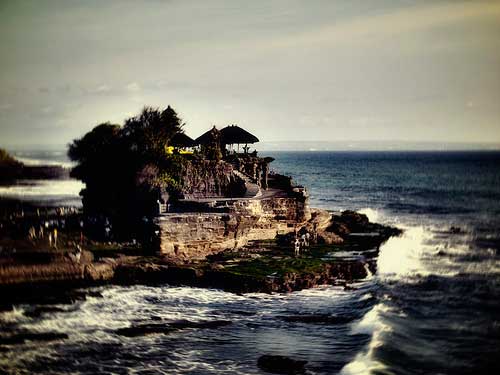
Pura Tanah Lot Bali
Pura Tanah Lot

Another majestic rock formation that lays as a foundation of a popular pilgrimage temple. It is most popular for its serenity and cultural significance as it is associated with the Balinese mythology as one of the seven temples that form a ring in the southwest of Bali. Try to go there during low tide so that you can experience walking across the water to the temple for the full experience.


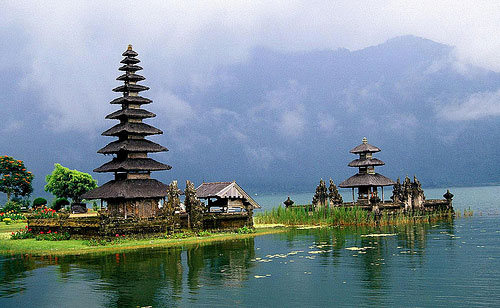
Pura Ulun Danu Bratan (Bali’s temple by the lake)

This is the famous temple by the lake in Bali, where instead of like the rest perching on the cliff rock, this one is serenely resting at the edge of Lake Bratan. Imagine beautifully structured temple with double the beauty due to reflections of the clear lake.


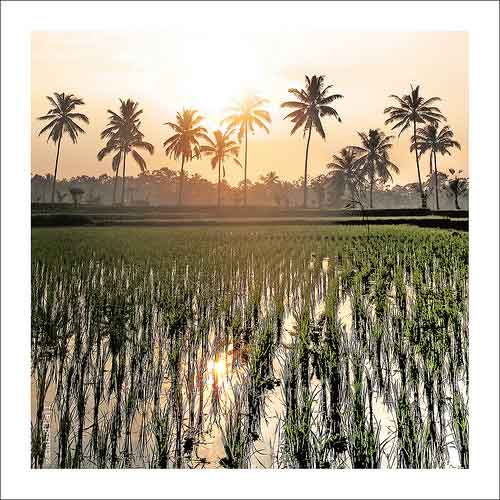
Paddy rice fields Ubud, Bali
Dolphin sightings at Lovina

One of the best place in the world to do dolphin sighting boat trip. You will leave the beach at dawn to seek for the dolphins, though yes it may be quite crowded with other tourists trying to do the same especially during peak season, it is still well worth it when you find a school of dolphins happily jumping by. Lovina itself have a number of other attractions and activities itself, and boasts itself some backpacker scene where you can chill out in cafes and with live musics.


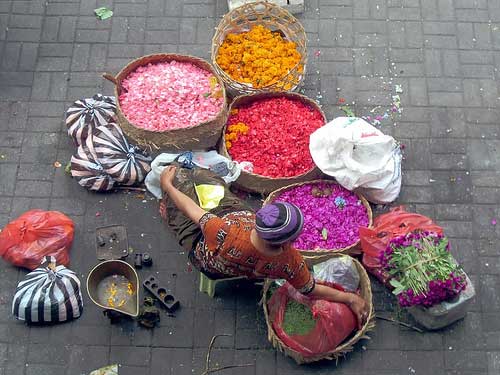
Lady selling flowers at the Market Ubud, Bali
Ubud

Yes despite that one might be trying to escape the eat, pray, love trail, Ubud is one place you cannot miss. It is still the heart of Bali, where all the action is and all the people and energy are focused on. Ubud is packed and condensed with the best of Bali, ranging from nature, culture and people, temples, museums, rolling rice/paddy fields and man-made gardens and parks. You may take a interesting bike tour around here or take up cooking, adventure activities like whitewater rafting and other outdoor activities, relax yourself with yoga and meditation or have some pampering of spas and massages and also enjoy arts and theatres and not to forget shopping. Just so you see Ubud have a little bit of everything for almost everyone.


Party Kuta Beach, Bali
Party at Kuta Beach

The most popular beach in Bali, which means you can be sure to find the life and party scene here in Kuta Beach. Head here if you are looking out to socialize, party and have a good time. You be sure to find a range of places for different atmosphere and budget, ranging from Hard Rock cafe to your neighborhood cafe and pub.


Private Beach Nusa Dua, Bali
Private beach at Nusa Dua Beach

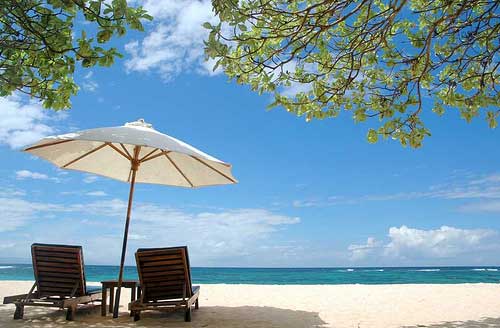
If you have a bit more of a budget to spare, splurge at Nusa Dua beach, where it is dotted with higher end hotels. You will be rewarded with private pristine beaches for you to slowly soak in the sun and the sea. Also ideal for honeymooners or people looking out for a private and relaxing getaway.


Hike Mount Batur Kintamani, Bali
Hike/Climb Mount Batur at Kintamani

Up in a highland in East of Bali, there lies Mount Batur caldera in Kintamani. A climb to the summit (1700 meters) of this active volcano is a great experience for any active travelers. Many would do the sunrise hike for an ultimate experience, starting from as early as 4am to reach in time for 6am sunrise. This hike is relatively easy and the treks are quite well marked. From the peak of the mountain, there are views in all direction to sweep you off your feet, not literally of course.


Bar on rocks Ayana, Bali
Ayana bar on rocks

We have two temples on the cliff, now we get to drink off the bar perched on yet another cliff at Ayana in Bali. This is known as the best bar in Bali, having a long line of people daily trying to get in and have a drink or two with some bites (which is surprisingly good) while overlooking the sea crashing into the rocks below. Think about drinking, chilling and also dancing atop a cliff with the roaring sea stretching behind you to infinity while you watch white water crashed onto the side of the wall creating a spectacular of natural show. If you decide where is one bar you must go to, Ayana bar on the rocks is the place.
Coffee plantation at Bali Pulina Agro Tourism


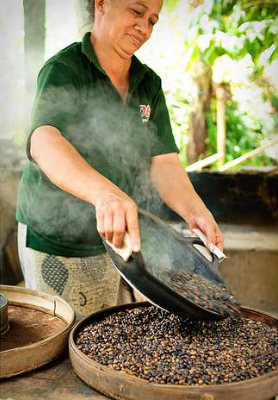
Coffee roasting Agro Plantation, Bali


An almost zen place for you to sit back and really appreciate your cup of coffee while overlooking the coffee plantation as far as the eye can see. Here you are served with various coffee and tea for tasting. You can also see the process of how the famous and expensive Kopi Luwak are made and even the civet cats themselves. If you are a coffee lover, do come check this place out for the ultimate coffee experience.

So you have it, ten reasons to visit Bali and these are just the highlights. Now you know the reason behind Bali’s popularity, so maybe people can just be right sometimes. Come over with an open heart and open arms, huge ounce of patience and tolerance for crowd, close an eye to all the touristy things glaring at you and just enjoy yourself here. If all else fail, you can always jump on the next available fast boat and escape to Gili Islands at Lombok!

2 July 2013

Barong and Keris Dance

A tour to Bali isn't complete without attending the many cultural performance around the island. The Barong and Keris dance is one of the performance we attended in Batubulan. Although, it is hard to understand the whole epic, still it is worth watching the colorful play and listening to the smooth gamelan music throughout the show.

The traditional gamelan musicians accompanying the performance
The dance is about a battle between the good and evil. Interestingly, the whole dance-drama brought together the element of religion, history and mythology into play which they believe that the reality of the world is all about good and bad.
It was an enjoyable show to watch but not for a faint heart as the characters played are very strong and at some point the music and the dance can increase the heart beat. We took the seats in the first row and at times the sound of the Barong and Rangada thumping on the grounds with bells ringing furiously took us by surprise.
On the whole, I think this is a powerful dance that draws our eyes and sight to their movement. There're actually other places where the same dance is on show but the one in Batubulan is said to be the best in the island. This is definitely a must-see when you are in Bali. The ticket is 100,000 Rupiah.

The servants of Dewi Kunti
Eyes movement is the key element of the Bali dancing

Servants of Dewi Kunti clad in colorful costumes

Sadewa, the son of Dewi Kunti - a female acting the role of a male

Sadewa with the servants


In anger


A playact to entertain the audience


Sadewa is going to fight the Barong


The evil spirit, Rangada, in wrath


The Barong men tries to kill Rangada but failed and they killed themselves

BALI EXPERIENCE POPULAR PLACE


The island of Bali is probably the best-known tourist destination in Indonesia. Bali is the most popular spot for leisure activities given its exceptional tourist offerings. Bali a small diamond shaped island nestled between the Indian and Pacific Ocean is part of the Indonesian archipelago that lies 8 to 9 degrees South of the equator between Java in the West and Lombok in the East. The island covers a small area of only 5,632 square kilometres where vast chains of volcanic mountains between 1,350 meters and 3,000 meters high stretch across from the West to East end. Surrounded with beautiful beaches, the island holds lush tropical forests, pristine crater lakes, fast flowing rivers and picturesque rice terraces. The South coast consists of white sand beaches, while in other parts of the island the beaches are covered with exotic black volcanic sand.

The beauty of Bali is also enriched by the sincerity of its people. The population has grown to over 3.1 million people with an overwhelming majority of Hindus. The island’s largest city and administrative centre is the fast growing Denpasar with population of over 530,000. Tourism is spreading rapidly in all directions, making it the largest industry to date. In Bali. the traditional tourism area includes a vast area between Denpasar, Kuta, Sanur and Ubud. Smaller towns such as Jimbaran, Tuban, Legian, Seminyak, and Canggu are also developing into busy tourist areas. In the other hand, the Nusa Dua area with its five star hotel compound represents a
more modern approach to tourism.


Historically, the genuine interest for Bali began during the Dutch conquest where the Colonial government strove to protect and promote Bali as a living museum following the respect for the indigenous tradition and culture. This initiative resulted in the arrival of wealthy aristocrats and intellectuals during the early 1920s that came from all around the world to sample the so-called last paradise. After independence and the instigation of the New Order, the era of mass tourism opened in Bali. Later, the development of infrastructure and the swift response of the Balinese people towards the industry have positioned Bali as the focal point of the development of Indonesian tourism.


Currently, large proportion of tourists and visitors alike to Indonesia, spend most of their time in Bali. During the year 2001, over 1.3 million visitors came to Bali with an average length of stay of 11 days and an average spending of US$ 77,35 per day. It is predicted that in the year 2003 the numbers of visitor will decline moderately following the aftermath of the Bali Bombings in Kuta 2002 and the Irak crisis. However, the last few months has shown more promising trends particularly after the detention of the individuals responsible behind the Bali bombings.


In this expanding tourism industry, home and small-scale industries are thriving especially in the producing of handicrafts and souvenirs for local consumption and exports with main buyers coming from the United States Europe and Japan. The textile, garment, and handicraft industry are key aspects of Bali’s export earnings. In the year 2000 craft industry exports amounted to US $ 348 million. From the total export earnings of US $ 406 million, the contribution of craft industries amounts to 85,58 %. With this significance, the development of
craft industry in Bali at present and in the future is hoped to be come a model of culture industry for others.

Tourism in Bali creates employment and has enormous potentials in the sustainable development of economy, environment and social culture. Tourism has become a realistic option for development in many areas. Therefore, there is a strong likelihood that the tourism industry will continue to grow globally over the short to medium term. Of course mismanagement can have a harmful effect particularly damage to the environment and local culture. The challenge is to manage the future growth of the industry in order to minimize negative impacts on the environment and host communities whilst maximizing the benefits it brings in terms economic,
social and cultural development.

SHADOW PUPPET IN BALINESE

The wayang puppet show is perhaps the most famous show in Balinese theatre, albeit the most difficult to understand. Basically an epic narrative, it is the key to Bali's unique world of myths, symbols and religious beliefs. The puppet master, or datang, tells his story by projecting the shadows of the puppets he manipulates behind a white screen and a large lamp. He plays several characters at once, shifting from Old-Javanese to High-Balinese, singing and hitting a box to mark the rhythm. A good dalang is a one-man-show, being in turns smart, funny and melancholic.

The daLang borrows the frame of his narrative from the great epics of the Indo-Javanese tradition, the Mahabharata and the Ramayana, although other stories may sometimes be used. He then creates his own episodes, usually concerning a hero's quest for a magical weapon, heavenly secret or partner.


Wayang Kulit or Wayang Shadow
The hero, accompanied by buffoons, succeeds eventually after tortuous adventures in the wilderness and fights with evil giants. The two sets of puppets - the heroes on the right, villains on the left - symbolise the eternal struggle between good and evil. But for the audience, the datang's ability to poke fun at everyone through the mouths of the buffoons is no less important than the narrative.

Most Popular Bali Dances

The Joged Bumbung Dance is one of the few exclusively secular dances of Bali, in which the brightly-dressed dancer invites men from the crowd to dance with her in a pretence of seduction. The music is made with bumbung (baMboo) instruments. This dance is very popular with tourists.

The Joged Bumbung dance begins with a long opening sequence by the female dancer. Then, long shawl in her hand, she selects a man from the audience by either pointing with her fan or touching his waist. He (the pengibing) comes on stage to hoots from the audience, and is expected to be as adept at teasing as the women dancer. The better he is, the louder the cheers and roars from the crowd. He may try to pinch her, dance hip to hip with her, or even behave like an angry lover and try to hit her.
Jangaer Dance
The best Janger that I've ever seen. A combination of Janger and Arja. The boys also wear an uncommon clothes for Janger, this costume is for Oleg. That was one of the best balinese dance performances i've ever seen, and i lived in bali for a while last year.

Kecak Bali Dance Traditional


Kecak Dance performance at GWK Amphitheater
Prev|Next
The History of Kecak

Kecak was originally a trance ritual accompanied by male chorus. German painter and musician Walter Spies became deeply interested in the ritual while living in Bali in the 1930s and worked to recreate it into a drama, based on the Hindu Ramayana and including dance, intended to be presented to Western tourist audiences. This transformation is an example of what James Clifford describes as part of the “modern art-culture system” in which, “the West or the central power adopts, transforms, and consumes non-Western or peripheral cultural elements, while making ‘art’ which was once embedded in the culture as a whole, into a separate entity.” Spies worked with Wayan Limbak and Limbak popularized the dance by traveling throughout the world with Balinese performance groups. These travels have helped to make the Kecak famous throughout the world.

Performer, choreographer, and scholar I Wayan Dibia cites a contrasting theory that the Balinese were already developing the form when Spies arrived on the island. For example, well-known dancer I Limbak had incorporated Baris movements into the cak leader role during the 1920s. “Spies liked this innovation,” and it suggested that Limbak, “devise a spectacle based on the Ramayana,” accompanied by cak chorus rather than gamelan, as would have been usual.

(source: Wikipedia)

1 July 2013

Wonderfull Tanah Lot Temple Bali

Tanah Lot Temple is located in coastal side of Beraban countryside, Kediri sub district and Tabanan Regency. It is situated in 30 Km in west side of Denpasar town and about 11 Km in south side of Tabanan town. The temple is built on the rock with 3 acre size and reachable in a few minute by walk, because it is just 20 meters from the coastal lip. This temple is very famous among tourist destinations in Bali with spectacular view of sunset. At some nooks of coral reef around Tanah Lot

Temple there are holy tame snake in black and white color where according to the local society believe that it as a deity property and as the guard of the temple from the bad influence.

Philosophy
The word of Tanah Lot is consisted of two words that are Tanah word interpreted as a reef looking like gili or isle. Lot or Lod word has meaning the sea. So Tanah Lot is meaning the small island floating on the sea. The location is now called as Tanah Lot has been used at a Megalithic period as a place that looked into holy, proven from the existence of menhir. Pursuant to environmental condition, hence the structure of Tanah Lot Temple is built at irregular reef plain of its angle which is only consisted of one plain yard as Jeroan.
Function
The function of this temple can be realized from the function of the main temple building which is located in the temple main area. In this place, there is a main temple to worship the god in form of Dewa Baruna or Bhatara Segara, the sea power. The media of worship to this god is the temple building with 5 storied meanwhile the 3 storied temple building in north part of this area is purposing to worship to Dang Hyang Nirartha.

In order to know the status of Tanah Lot Temple can be realized from the temple history, function and also incoming devotee existence pray when temple ceremony is held. In this case can be realized as follows:

Tanah Lot Temple as dang Kahyangan(the big Holy Temples in Bali ), because the history and the Penyiwi (The people taking care of the temple) are from the local people from Tabanan regency and surrounding area

Tanah Lot temple as Segara Temple, because its function as sanctum to worship the Bhatara Segara, the God with manifestation as the ocean Power Deity

The unique animal can be seen in this temple area is the snake which are generally can be met in the coast. Part of its stomach there are no athwart skin, there is only small skin, but this sea water snake very noxious but snakebite case are very seldom happened, because the sea water snake generally very passive.
What to See in Tanah Lot

As a favorite tourism destination in Bali, Tanah Lot owns a magnificent view in particular at the sunset time where the sun slows down to the earth stomach. Every visitor who is paying a visit to this place will be marveled to see the beauty panorama of Tanah Lot. Beside of this temple, there are other temples which can be seen on your visit to Tanah Lot like Batu Bolong Temple, Batumejan Temple and Enjung Galuh Temple.

The Capital of Bali Denpasar City

Denpasar City is a capital of Bali Province since 1960 up to now where previously it was a capital of Badung Empire which is controlling the south part region of Bali Island from the end of 18 century until conquered by Dutch in 1906. Denpasar is a place for Bali Governor's office therewith all offices from private sector until important government office like telecommunications, post office, bank, airline and hospital.
Philosophy


The word of Denpasar is mean in north of market. It is a fast growing town especially since the tourism industry growth around 1960. Denpasar is populated by 561.814 people. Gajah Mada Street is main road in this town as the shopping centre and the edge of this street, exactly in the middle of crossroad had been built a statue which is called Catur Muka Statue. Caur Muka Statue is a statue owning four faces by observing four directions from north, south, east and west. This statue is made on 1972 and it's building to commemorate the Badung War on 20 September 1906 which is well known as Puputan Badung.

Places of Interest The courtyard which is located in the south east of Catur Muka Statue is named Puputan Badung Field where the Badung King with its people had battled until him dead against the Dutch colonist. In north side of Puputan Badung is standing up the office which is called Jaya Sabha that is an official office for Bali's Governor accepts the important guest for having dinner while enjoying the Balinese Culture Show. In eastside of Puputan Badung, it had been built a Hindu temple on 1968 that is called Jagatnatha Temple. This Temple is a public temple to worship Ida Sang Hyang Widhi Wasa / God. Especially each full moon, The Hindu people in Denpasar come to this place in particular at the evening time. In south side of this temple, there is Bali Museum built on 1931 by architect of Curt Grundler. Its architecture is a combination between temple and empire palace. This Museum contains the artistic object collection or artifact from prehistoric era until modern-day. Another place is becoming tourist destination is Puri Pamecutan/Pamecutan Palace. There are lodgings for the tourist accommodations are available in this palace. This palace is rebuilt as according to its geniuses after broken by Dutch soldier on 1906 and in this palace is kept a set famous Gold Gamelan as empire heritage.

Nusa Dua bali

Nusa Dua Bali
Nusa Dua is an elite resort area with international five star hotels and resorts existing on the costal side in south part of Bali. It is located in Badung Regency and about 25 minutes drive from Bali's International airport. Nusa Dua with 350 ha size is the sample luxury resort area and one of best tourism places in the world. In fact, the name of Nusa Dua is coming from two small islands located in the south part of Bali Island (Nusa mean the island and Dua mean two) that is dissociated with the white sand.


History Nusa Dua Bali Nusa Dua Area is start built in year 1974,as a result from study of French consultant, SCETO ( Societe Centrale pour l'equpeent Touristique Ouetre-Mer) in the year 1970 and also feasibility study conducted by PCI (Pacific Consultants International) year 1971-1973 for financing of World Bank aid. The Indonesian Government has delivered this area management to PT. BTDC (Bali Tourism Development Corporation) which existing under the law and regulation of Republic Indonesia Government no.27 year 1972, on 12 November 1972.

Tourist Places in Bali This area owns the most complete tourism facilities in Bali and Indonesia like five star hotels, luxury accommodations, villas, convention hall, shopping center and beautiful beaches. The five star hotels exist in this area are Club Med, Nusa Dua Beach Hotel, The Westin Resort, The Laguna Resort, Melia Bali Villas and Spa, Inna Putri Bali Hotel, The Ayodya Resort, Kayu Manis Villa, Nikko Bali Resort and Spa, The Bale Villas and Novotel Nusa Dua. There are also the sports activities are available in this are like tennis court, squash and golf course. Each hotel is completed by five star restaurant facilities, bar, pub and beach activities. Nusa Dua is an ideal place for holiday in Bali.

Gua Gajah Bali (Elephant Cave)


Gua Gajah - Elephant Cave Welcome to Gua Gajah (Elephant Cave) which is located in west side of Bedulu countryside, Blah Batuh Sub district and Gianyar Regency. It is about 27 km from Denpasar town. This cave is built at crevasse edge from the federation of 2 rills that is called Pangkung River , where the irrigation is mixed with Petanu River flow. The federation area of two rivers is called Campuhan/Mixture.


It owns the magical energy on the basis of Rwabineda Concept/two different matters on this basic concept hence Gua Gajah (Elephant Cave) is intentionally built among two rivers.

Gua Gajah in Story
The word of Gua Gajah is anticipated coming from the word of Lwa Gajah, the name of Buddhist Temple or hermitage for Buddhist monk. The Gua Gajah's name is written on Negarakeertagama papyrus which is compiled by Mpu Prapanca on 1365 M. Lwa or Lwah/loh mean the river and it reflect to the meaning that the hermitage is located at Gajah River or in Air Gajah. In the year inscription 944 Saka, it is mentioned with the name of ‘ser ring Air Gajah' that is meaning the Subak leader in Air Gajah. The word has mentioned that the hermitage of Lwa Gajah is located in Subak Air Gajah.

What to see? There is a relief which is almost looking like the form of mountain on the entrance of this cave. It was carved many designed on the relief like grove with the stick, close leaf, animal for example forest pig, tortoise and specters. The cave mouth is decorated by the bas-relief with the eye turn around to the right or west side. There is an article letter of Kediri type from the early of 11 century was written on the wall left side or east side. There is a pool (Patirthaan) as a place to take the holy Tirtha water for Hindu ceremony which is located in the middle of the cave courtyard. This Holy Pool is previously piled up by land and it has been found on 1954 by Krijgsman from the Ancient Department. The Holy pool is equipped by the statue douche which is parallel arranged in two groups.
Tourist Destinations and Facilities Since it is appointed as tourist destination, Gua Gajah is many visited by tourist everyday due to it is strategically located on the main road Ubud – Kintamani. Kintamani Volcano Tour is one of the famous land tour in Bali usually put this tourist destination on the tour itinerary. It was well completed by public facilities like toilet, parking area and souvenir shops available.

Uniqe Sangeh Monkey Forest Balinese

Sangeh is a small fertile monkey forest dwelling by the group of monkeys. It is located in Sangeh countryside, Badung Regency, north part of Denpasar town. It is one of tourist destinations in Bali which is strategically located beside of the road. The good road has been provided to reach this place and many tourists has come to this place to see the cute of monkeys.
Sangeh Monkey Forest History

In the century 17 at Monarchic golden era of Mengwi, I Gusti Agung Ketut Karangasem, the son of I Gusti Agung Made Agung, had built the temple in the middle of nutmeg forest and hereinafter it is called as Bukit Sari Temple (like small forest with mixture vegetation and broadness about 10,8 ha). The mythos of this Sangeh Forest is relevant to the happening of forest wood evacuation from Agung Mount in Karangasem to Mengwi in regency of Badung. But on the way of the evacuation, it seen or known by somebody so that it finally becomes the forest which is named with Sangeh. This Nutmeg Forest is formally as a Tourism Garden Nature, which is also as a holy area of temple for worshiping to the god. It is executed from local people from Sangeh Countryside and its surrounding area. It is also become a secret function beside of tourist object as a commercial tourism business.
What are there in Sangeh?
According to the info rmation of Hall KSDA (Experienced Resource Conservation) Forest Department, Sangeh Forest is growth by 6.825 grove bar, which is consisted of 28 birch and also 22 clump type/bush. In shares of extension area (3,169 ha) whish is located in west part of this forest area, it has been cultivated by some plant types like Chico Kecik, Mahoney and guava. This part is then expected to be the food source for about 500 monkeys populating this forest. The monkey species living in Sangeh is Macaca fascicularis. This monkey lives in three different group are located in east, middle, and west side. Sangeh forest have succeeded identified 22 types (species) bird, 5 mammal types, 3 reptile types, 2 type of amphibians and also 5 type of arthropods.

Tourist Destination Sangeh is a tourist destination in Bali managed by the special organizer from local resident which is consisted of 21 organizers. Beside of that, they also assisted by staff from the duty Forestry, especially from KSDA. Sangeh as a Tourism Object is opened every day, between 7:30 in the morning until 6:00 evening. This tourism object is located about 20 km in north side of Denpasar town with the travel distance about 30 minutes from Denpasar and passing the main road of Denpasar- Pelaga. This tourism object is completed by parking area, toilet, art shops, souvenir shops, restaurant, footpath, and others.

Tanah Lot Temple Balinese

Tanah Lot Temple is located in coastal side of Beraban countryside, Kediri sub district and Tabanan Regency. It is situated in 30 Km in west side of Denpasar town and about 11 Km in south side of Tabanan town. The temple is built on the rock with 3 acre size and reachable in a few minute by walk, because it is just 20 meters from the coastal lip. This temple is very famous among tourist destinations in Bali with spectacular view of sunset. At some nooks of coral reef around Tanah Lot Temple there are holy tame snake in black and white color where according to the local society believe that it as a deity property and as the guard of the temple from the bad influence.


Philosophy
 
The word of Tanah Lot is consisted of two words that are Tanah word interpreted as a reef looking like gili or isle. Lot or Lod word has meaning the sea. So Tanah Lot is meaning the small island floating on the sea. The location is now called as Tanah Lot has been used at a Megalithic period as a place that looked into holy, proven from the existence of menhir. Pursuant to environmental condition, hence the structure of Tanah Lot Temple is built at irregular reef plain of its angle which is only consisted of one plain yard as Jeroan.
Function
The function of this temple can be realized from the function of the main temple building which is located in the temple main area. In this place, there is a main temple to worship the god in form of Dewa Baruna or Bhatara Segara, the sea power. The media of worship to this god is the temple building with 5 storied meanwhile the 3 storied temple building in north part of this area is purposing to worship to Dang Hyang Nirartha.

In order to know the status of Tanah Lot Temple can be realized from the temple history, function and also incoming devotee existence pray when temple ceremony is held. In this case can be realized as follows:

Tanah Lot Temple as dang Kahyangan(the big Holy Temples in Bali ), because the history and the Penyiwi (The people taking care of the temple) are from the local people from Tabanan regency and surrounding area

Tanah Lot temple as Segara Temple, because its function as sanctum to worship the Bhatara Segara, the God with manifestation as the ocean Power Deity

The unique animal can be seen in this temple area is the snake which are generally can be met in the coast. Part of its stomach there are no athwart skin, there is only small skin, but this sea water snake very noxious but snakebite case are very seldom happened, because the sea water snake generally very passive.
What to See in Tanah Lot
As a favorite tourism destination in Bali, Tanah Lot owns a magnificent view in particular at the sunset time where the sun slows down to the earth stomach. Every visitor who is paying a visit to this place will be marveled to see the beauty panorama of Tanah Lot. Beside of this temple, there are other temples which can be seen on your visit to Tanah Lot like Batu Bolong Temple, Batumejan Temple and Enjung Galuh Temple.

Besakih Temple Bali

Besakih Temple is the biggest Hindu temple in Bali which the local people call Pura Besakih. It owns beautiful view from the top of temple area where we can see the wide nature panorama until to the ocean so that way this temple is many visited by tourists from all over the world. Besakih Temple is located in Besakih countryside, Rendang sub district, Karangasem regency, east part of the island. It is located in southwest side bevel of mount Agung, the biggest mounts in Bali. It is because pursuant to Agung Mount confidence is holiest and highest mount in Bali Island. 
Besakih in Mythology
The Besakih's name is come from the word of Basuki, the old language from Sanskrit Wasuki, and then it become the Ancient Java Language. In this Sanskrit, the Basuki means congratulation. In mythology of Samudramanthana has mentioned that Basuki is a dragon that twines the Mount Mandara. The omission has come from tradition megalithic which had been indicated that it had to be sanctified place. It seems, the Besakih is coming from very old era which is far before the existence of Hinduism influence. Hereinafter, an Ancient Bali king of Sri Kesari Warmadewa found the Merajan Selonding Temple in this temple complex area. He also commands to build the Blanjong Monument that is located in Sanur Village. The Besakih Temple complex is built pursuant to cosmos balance. It is based on the nature conception which is disseminating the fundamental temple complex that is arranged to pursuant of the way direction. So, this building can deputize nature as symbolic of the world balance existence.

Besakih Temple in Hindu's Philosophy
As we familiarize, that the point direction way like East, South, West, North, and middle as center point and each direction is named by Mandala. In Hindu philosophy, Panca Dewata is manifestation of Siwa God. Like Penataran Agung Temple as center, we find in its courtyard conception show the solidarity conception between the original Indonesia culture namely tradition megalithic in form of Punden Berundak-undak with the Hinduism concept. The ancient omissions which is existing in Besakih Temple complex can be classified into 2 types those are omission pertained by megalithic tradition and classic era. Besakih Temple beside as the altar for Hindu people in Bali, it is also as tourist destination which is a lot of visited by tourists.
Besakih, Place to Visit in Bali Besakih Temple is located in the plateau area which is covered by the cool atmosphere and Mount Agung as a back drop. From the top of temple building, we can see the beautiful panorama of nature from the temple area to the ocean. It is situated in cool area with the light breeze and unique temple buildings spread out in the temple complex will create the peaceful atmosphere. It is ideally for the people who did the meditation and now, the Besakih Temple is opened for tourist and it is the great place to visit in Bali.
How to locate Besakih Temple? It is very easy to find this temple in Bali where most of the people have known it in particular the Balinese Hindu. It is about 2 hours away from Bali's International Airport by car to the east part of Bali and right located in Besakih Village, Rendang – Karangasem Regency. You may join the Besakih Temple Tour, the exciting tour package to visit the places of interest on the way to this temple